
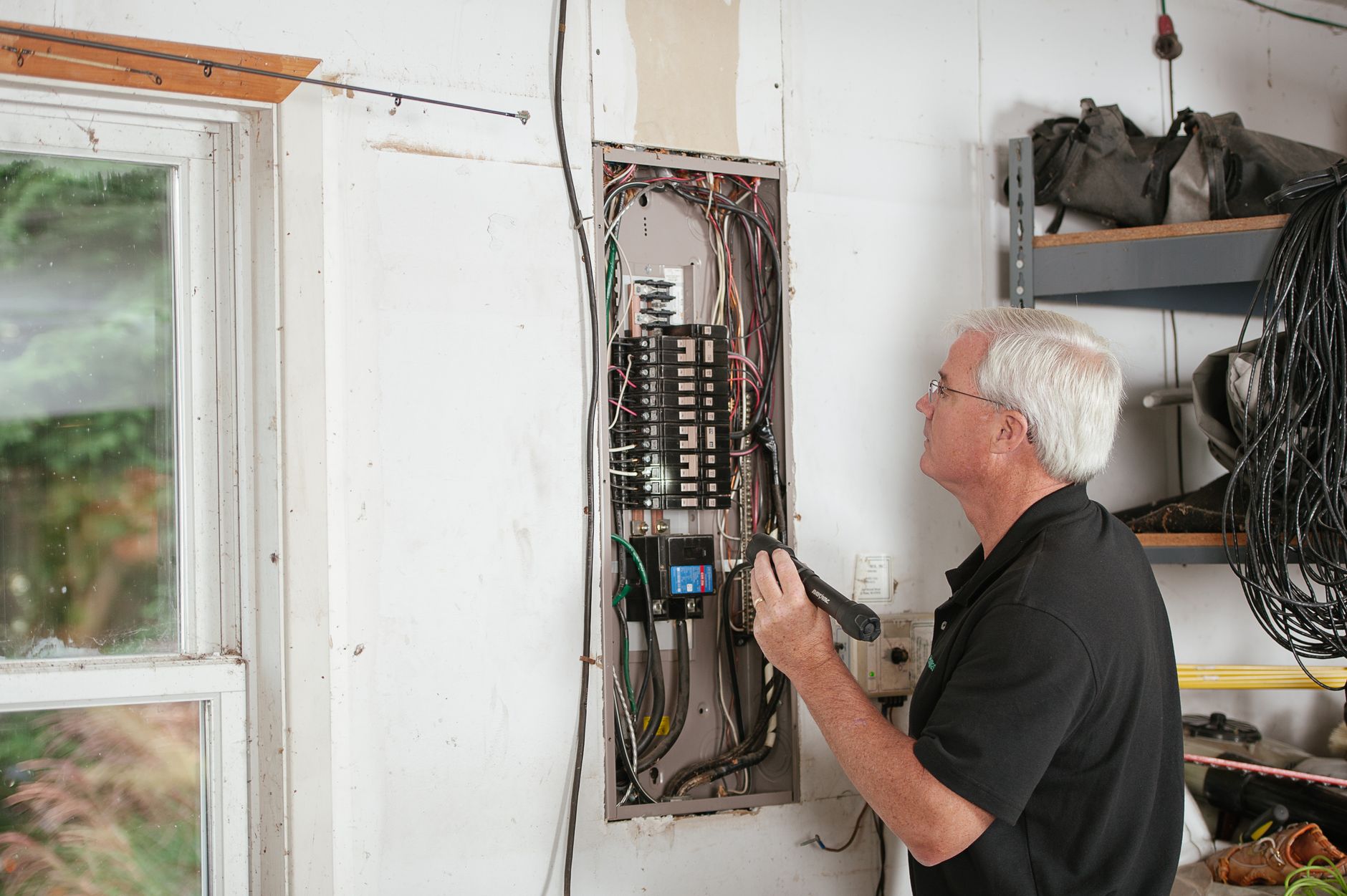
The One-Hand Rule: Why Electricians Can't Answer Calls Near Live Panels
NFPA 70E electrical safety rules require electricians to keep one hand in their pocket near energized panels to prevent lethal heart-crossing current. Here is why a ringing smartphone near a 200A service entrance is a life-threatening distraction.

AIRI
Every apprentice electrician learns the rule during their first month on commercial and residential jobsites:
"When probing or working near an energized electrical panel, keep one hand in your pocket or behind your back."
It sounds counterintuitive to laypeople. Why would a skilled tradesperson deliberately work with only one hand?
The answer is basic human biology and physics.
If both of your hands are inside an energized panel enclosure and you accidentally contact two different phases, or contact an ungrounded conductor with one hand while touching the grounded metal cabinet with the other, electrical current enters one hand, travels up the arm, passes directly through your heart muscle, and exits through the opposite arm.
As little as 50 to 100 milliamperes (mA) of alternating current passing through the thoracic cavity is enough to cause immediate ventricular fibrillation—the uncoordinated fluttering of heart muscle that stops blood circulation and causes death within minutes.
By keeping one hand strictly in your pocket, any accidental shock current is forced to travel down through your torso and legs to ground, vastly reducing the probability of a lethal cardiac arrest.
Now consider what happens when a smartphone begins violently buzzing in an electrician's cargo pocket while their face is twelve inches away from a live 200-amp main service breaker.
The Startle Reflex and the Arc Flash Hazard
The danger of a ringing phone in electrical contracting is not just the physical act of answering. It is the acoustic and tactile startle reflex.
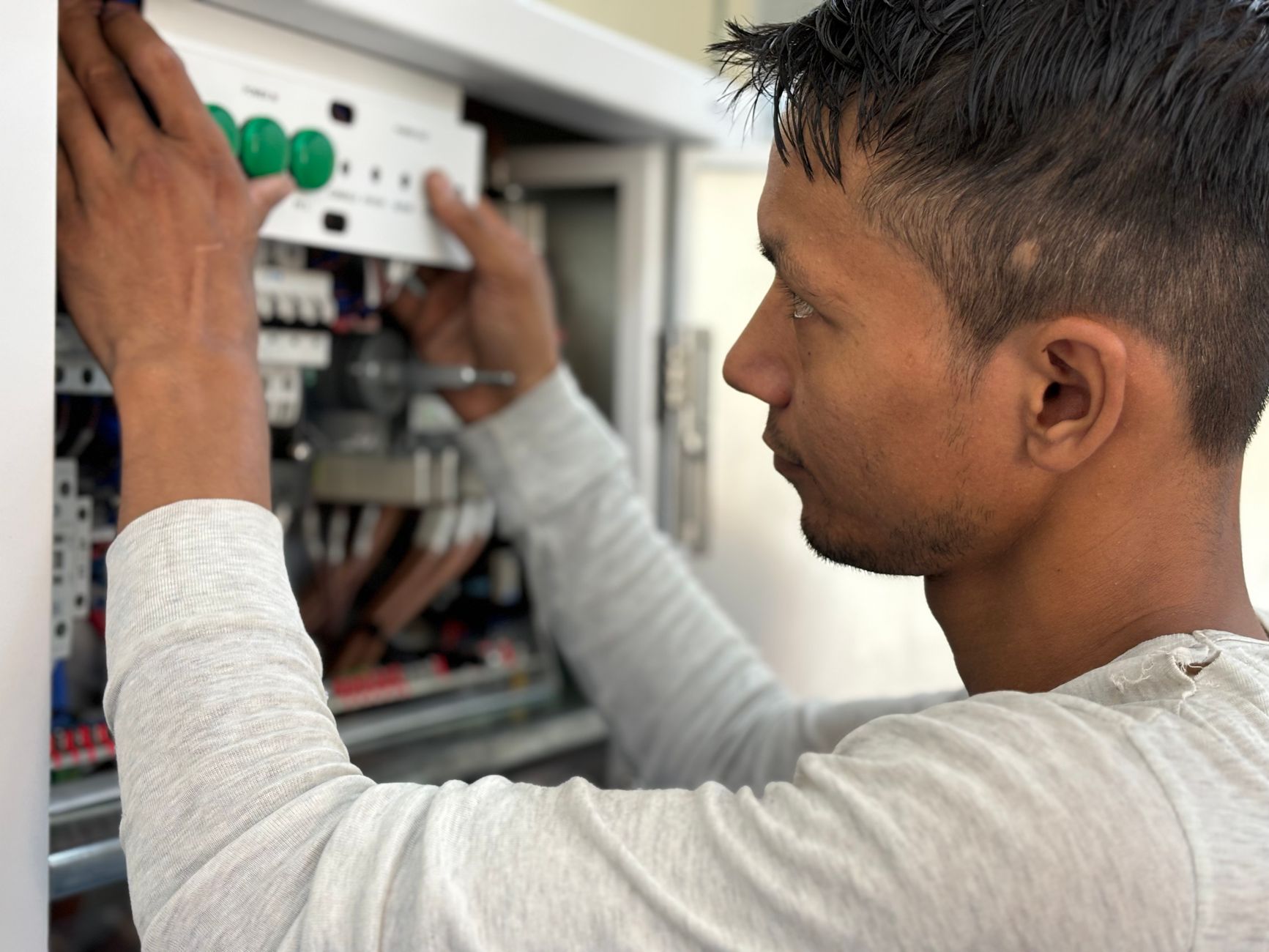
When a technician is using insulated multimeter probes to verify voltage on energized 240-volt aluminum bus bars:
- Their eyes are tracking phase-to-phase readings on a digital screen.
- Their muscles are under fine motor control to keep sharp probe tips from slipping across the 1/4-inch clearance between adjacent phases.
- An unexpected loud ringtone or sudden vibration against the thigh can trigger an involuntary neurological twitch.
In high-amperage electrical distribution, a slipped metal probe tip bridging live bus bars creates an instantaneous phase-to-phase dead short:
An arc flash vaporizes solid copper into an expanding plasma gas cloud in less than a tenth of a second, causing third-degree burns, ruptured eardrums from the supersonic pressure wave, and permanent blindness.
No qualified journeyman or master electrician will ever reach for a cell phone while standing inside the arc flash boundary of an open electrical service panel.
The PPE Barrier: Class 0 Rubber Gloves
Even during routine troubleshooting, safety standards codified in NFPA 70E (Standard for Electrical Safety in the Workplace) require electrical workers to wear specialized personal protective equipment:
- Class 0 or 00 dielectric rubber insulating gloves tested to withstand up to 1,000 volts.
- Heavy leather protector gauntlets worn over the rubber to prevent physical punctures and tears.
- Arc-rated face shields and safety glasses.
Dielectric rubber is an electrical insulator by definition. It completely prevents the transfer of capacitive electrical charge from human skin to a touch-sensitive glass screen.
Attempting to answer an iPhone through high-voltage rubber gloves is physically impossible. Answering requires stepping back from the panel, setting down test instruments, peeling off gauntlets, and removing safety gear—a 45-second process that guarantees the caller reaches voicemail.
The High-Ticket Irony of Electrical Calls
The tragic irony for electrical contractors is that missed calls are frequently the highest-margin jobs of the month:
- A homeowner whose main breaker keeps tripping when the oven and clothes dryer run simultaneously (a $4,500 200A service upgrade).
- A residential EV owner whose newly installed Level-2 car charger is dropping voltage (a $1,800 dedicated circuit run).
- A homeowner smelling fishy or burning plastic odors near their panel—the classic sign of an arcing breaker terminal (a high-urgency $2,800 panel swap).
When an electrician observes the one-hand rule and ignores their phone, that $4,500 panel upgrade walks directly to the next contractor on Google.
How AIRI Acts as Your Off-Site Electrical Dispatcher
Electricians should never compromise jobsite safety protocols to answer customer inquiries.
AIRI handles the phone while you keep your hands safely on the tools:
- Cloud-Based Pickup on Ring Two: AIRI answers every call instantly from the cloud, completely eliminating the need for technicians to touch devices near energized equipment.
- Electrical Diagnostic Qualification: AIRI asks the critical technical questions: "Are you smelling any burning plastic odors? Is the issue affecting individual outlets or the entire home? What is the main breaker rating on your panel?"
- Emergency Rate Authorization: AIRI quotes your after-hours diagnostic and emergency dispatch rates, securing customer confirmation before dispatching.
You maintain 100% compliance with NFPA 70E safety protocols, keep your hands where they belong, and keep your schedule booked with high-ticket panel upgrades.
Keep Your Focus on the Panel. Let AIRI Book the Work.
Never let a ringing smartphone compromise your safety near live conductors.
AIRI gives you instant 2-second voice answering, expert electrical triage, and 24/7 calendar booking for a flat $199/month.
Start your 7-day free trial of AIRI →
No credit card required. Takes less than 5 minutes to set up — go live in under 10 minutes.
Written by AIRI
AIRI is the 24/7 AI phone receptionist built for trade contractors. We write practical guides to help plumbers, HVAC techs, electricians, and roofers run a tighter business and never miss a paying job.
Try AIRI free for 7 days →
Stop losing $5,000 jobs
to voicemail.
AIRI picks up on ring two, qualifies emergencies, quotes your rates, and books appointments — while you stay on tools.
Takes less than 5 minutes to set up · Go live in under 10 minutes · No credit card required